
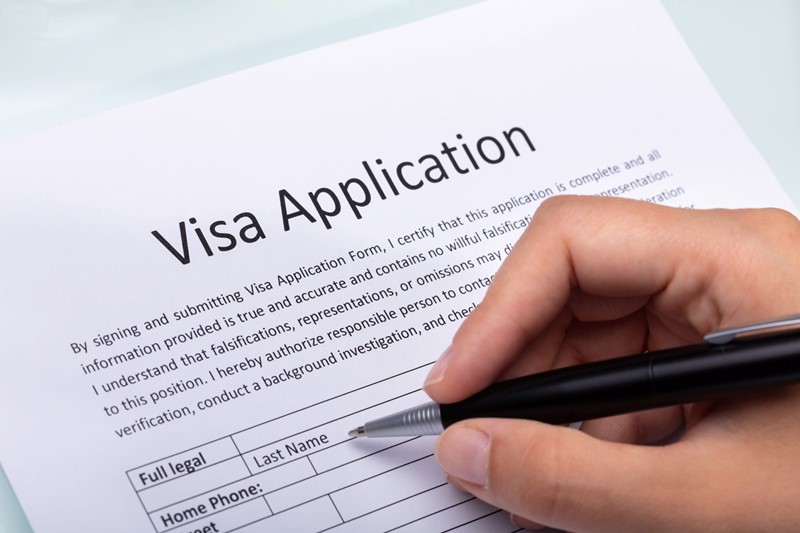
Almost every immigration application rests on the provision and acceptance of key documents, including bank statements, certificates, and letters of support. So what happens if the Home Office doubts them, or suggests that they are falsified? A recent Upper Tribunal decision, which will give general guidance for future cases, is a clear reminder of who has to prove what, and how easily an application can fail based on documents alone.
Who has to prove a document is genuine?
The starting point, long-established and reaffirmed in this decision, is that when you rely upon a document as material evidence, it is for you to show that it can be relied on. The Home Office does not have to prove that your documents are genuine and, as importantly, it is not obliged to check or verify them. Any disinterest in doing so affords an applicant no advantage and creates no presumption (or benefit of the doubt) in your favour. The reliability of a document is judged on a case-by-case basis alongside all the other evidence provided.
There is, however, a crucial distinction. If the Home Office goes further and actually alleges that a document is a forgery, which is, in and of itself, a serious allegation of dishonesty, then the burden shifts, as it is for the Home Office to prove that, with proper evidential basis. Where the Home Office relies on a verification or fraud report, the applicant must be shown it and given a fair chance to respond. In short, you must show that your documents are reliable; although a specific accusation of forgery is something the Home Office has to substantiate.
What the case decided
The Upper Tribunal heard a group of appeals, brought under the European Union Settlement Scheme, or EUSS, that shared troubling features – prospective immigrants submitted very little documentation in support of their applications and then filed documents late, including marriage and death certificates, bank statements and similar papers, raising administrative eyebrows as many of them turned out to be false. The appeals were dismissed, and the Tribunal treated attempts to withdraw them as an abuse of its process.
More usefully, this created the opportunity to restate the guidance. The longstanding approach to documents (based on a case called Tanveer Ahmed) still applies across all manner of immigration cases. Documents must be given to the Home Office in good time, and any late evidence may either be refused or else treated with caution. Where a person's credibility is in issue, an oral hearing will often be needed rather than a decision on the papers.
Implications:
The main repercussions of this case are as follows:
- The responsibility to prove that a document is genuine and reliable rests entirely on the applicant.
- The Home Office is not required to check your documents and will not give you the benefit of the doubt if they choose not to verify them.
- Documents must be submitted in good time; late evidence can be treated with caution or completely disregarded.
- If the Home Office explicitly accuses you of forgery or dishonesty, they must prove it with evidence.
- If the Home Office relies on a fraud or verification report, they must show it to you and give you a fair chance to respond.
- If your credibility is questioned, the case will usually require an oral hearing instead of a decision made purely on paperwork.
- Failing to attend hearings or answer questions will count against your application.
For anyone making an immigration application or appeal, the central message is that the responsibility to demonstrate that your documents are genuine and reliable rests with you. So present them punctually, ensure that they are complete, and actually served on the Home Office by recorded delivery, rather than dropped in at the last minute, as late evidence can simply be disregarded. Keep originals where you can, and be ready to explain and support what you submit rather than assuming that a document will be taken at face value.
Engagement matters just as much. Failing to attend a hearing, or to answer questions, counts against an applicant, and choosing to submit a paper document where its credibility is in doubt can be a false economy. It is also worth using a reputable adviser who carries out proper document checks.
The system does, however, protect the honest applicant. If the Home Office alleges that a document is falsified, that is a serious allegation which it must prove, not merely assert. If you are on the receiving end of such an allegation, then you are entitled to see the supporting evidence and to respond, and a wrongful allegation can be lawfully challenged – it should never simply be accepted.
The wider point is straightforward – immigration cases are won and lost on submitted documents. Ensuring that they are genuine, complete, properly served, and backed by real engagement with the process is often as important as the underlying merits of the claim itself. An otherwise strong application can founder on nothing more than how its paperwork was handled.
Disclaimer: This simplified summary of a UK legal case is intended for general information only. It is based on a claim addressed by an Upper Tribunal. It is not intended as legal advice, may omit important detail, and may not reflect any subsequent developments or appeals. Please read the full judgement and seek professional legal advice before acting.