
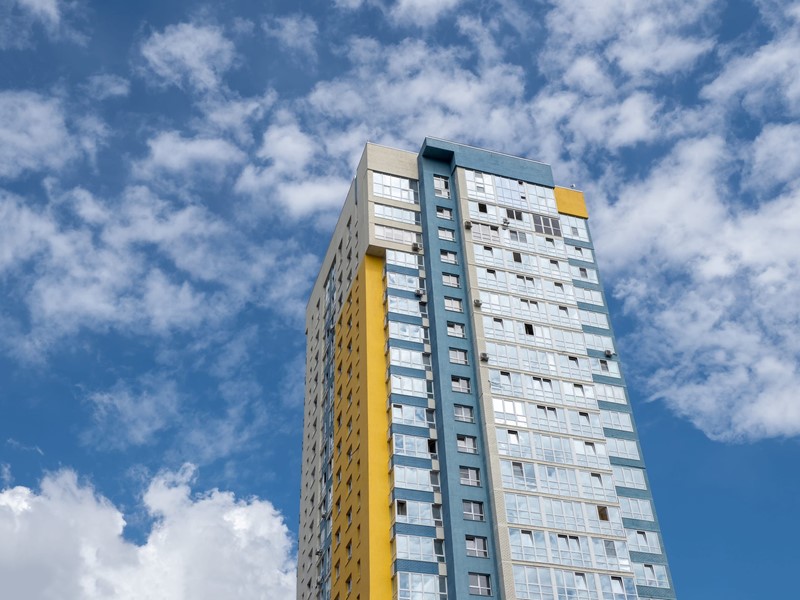
Discovering that your commercial building suffers from severe, safety-critical structural defects can bring a business to a grinding halt. Despite this apparent common sense, a recent landmark High Court ruling confirms that tenants cannot invoke the doctrine of frustration to walk away from their commercial obligations.
Background:
The dispute arose under a twenty-five-year commercial lease executed in 2007 for Voyager House, a property designated for use as an educational and residential facility. In the wake of the Grenfell Tower disaster, similar potentially catastrophic cladding defects were discovered in the building's external façade. Rectifying these defects to comply with building regulations meant that the property would be unsafe and entirely unoccupiable for several years to come.
Faced with a multi-million-pound claim for outstanding rent and service charges, the tenant raised the defence of frustration. They argued that the discovery of built-in defects destroyed the "common purpose" of the bargain, namely to operate a residential college. Alternatively, the tenant argued that the post-Grenfell legislative landscape, specifically Section 1A of the Fire Safety Act (FSA) 2021, Part 5 of the Building Safety Act (BSA) 2022, and the revised Approved Document B Vol. 2, introduced radical, unforeseeable statutory duties that frustrated the lease by law.
Decision:
The High Court decisively rejected the tenant's arguments and granted summary judgement on liability to the landlord. Reviewing such established authorities as the landmark Panalpina case and the Brexit-related Canary Wharf decision, the Court ruled that frustration cannot be invoked where a contract has already allocated the relevant risk.
By analysing the initial 2004 Agreement for Lease alongside the 2007 Lease, the Court found a sophisticated risk-allocation framework. Under Clause 9.3 of the initial agreement, the landlord’s construction liability ceased after the initial defects period, requiring the tenant to rely entirely on third-party contractor warranties for any latent defects.
Moreover, the lease terms themselves were absolute. Clause 3.7 imposed an unrestricted, full-repairing obligation, requiring the tenant to rebuild, reconstruct, or replace the premises whenever necessary. The only exception was for specific "insured risks," as defined in Clause 5.1, which suspended rent under Clause 5.4 for such events as storms or terrorism, yet conspicuously excluded latent design defects.
Additionally, Clause 6.5 explicitly stated that the landlord gave no warranty regarding the suitability of the premises for the tenant’s purposes. The Court also rejected the statutory defence, clarifying that, while the post-Grenfell legislation merely focused public attention on fire safety, it did not change the fact that buildings are always legally required to be safe. Because the tenant had contractually accepted the risk of structural failure and statutory compliance under Clause 3.15, the identity of the bargain remained unchanged.
Implications:
This ruling sends an unambiguous warning about the absolute finality of a full repairing and insuring (FRI) lease. When you sign a long-term commercial agreement, the English courts will assume that you have accepted the inherent risks of changing circumstances over time, including any severe, latent building defects that may only emerge decades later. You cannot later argue that an event frustrates a lease, simply because the remediation is too costly or because it forces your business out of the premises for a considerable period.
If your contract contains absolute repairing terms and explicitly disclaims suitability warranties, the financial burden of structural failure rests entirely on your shoulders. This underscores the absolute necessity of conducting exhaustive structural and environmental due diligence before executing any long-term lease. Prospective tenants must secure robust, enforceable collateral warranties from the original building contractors and design consultants, as these third-party guarantees may represent your only avenue of financial recourse if a building later becomes unoccupiable.
Furthermore, this decision clarifies that new safety regulations or statutory interventions will rarely provide a legal escape hatch from your lease. Even if a sweeping new Act of Parliament places heavy compliance burdens on your business or forces structural overhauls, the Court will likely view this as a continuation of your pre-existing duty to keep the premises safe and legally compliant. Ultimately, commercial tenants must recognise that their contractual obligation to pay rent quarterly and without deduction remains legally unassailable, even when the very walls of the property concerned require reconstruction.